How AI Avatars Are Changing KYC and KYB – Risks, Opportunities, and What Comes Next
AI avatars and synthetic identities are challenging traditional KYC and KYB processes. This article explores the risks, regulatory impact, and how financial institutions must adapt.
Digital identity verification is entering a new phase. AI-generated avatars, deepfake video, synthetic voices, and real-time face generation are no longer experimental technologies — they are accessible, scalable, and increasingly convincing.
For financial institutions, this raises a critical question: what happens to KYC and KYB when “real-looking” identities can be generated by machines?
AI avatars don’t just challenge existing verification processes. They force the industry to rethink how identity, intent, and trust are established in a digital-first world.
What Are AI Avatars?
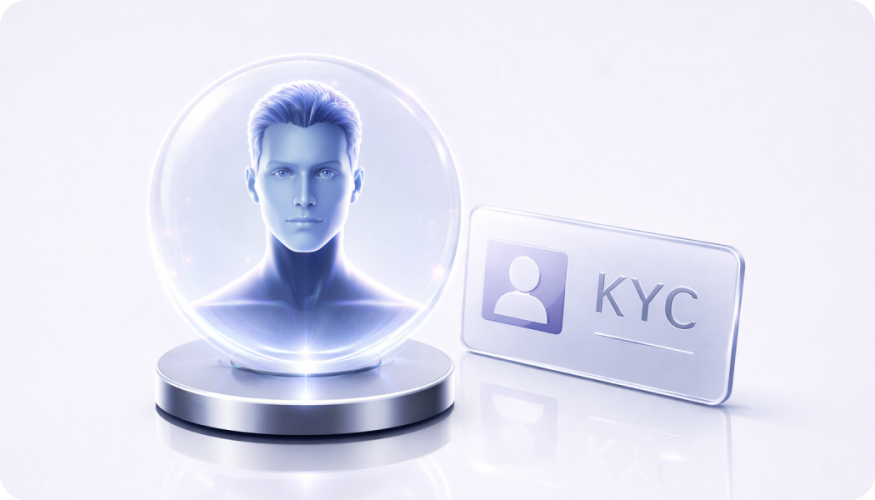
AI avatars are computer-generated representations of people created using artificial intelligence. They can appear as:
- Realistic video faces generated in real time
- Synthetic voices capable of natural speech
- Fully virtual humans that pass visual and audio checks
- Hybrid identities combining real and synthetic elements
These avatars can be used legitimately — for customer service, onboarding assistants, or accessibility — but they can also be weaponised to bypass identity controls.
This dual use is what makes AI avatars particularly relevant for KYC (Know Your Customer) and KYB (Know Your Business) frameworks.
Why AI Avatars Matter for KYC
Traditional KYC processes rely heavily on the assumption that a human on camera is, in fact, a real person presenting their own identity.
That assumption is weakening.
The Core KYC Risk
AI avatars can now:
- Mimic facial movements during live video checks
- Respond dynamically to prompts
- Match stolen or leaked identity documents
- Pass basic liveness detection
- Imitate real voices with high accuracy
This creates a new category of risk: synthetic identity fraud at scale.
Unlike stolen identities, synthetic identities can be created in volume, adapted quickly, and reused across institutions.
How AI Avatars Impact KYB Specifically
KYB introduces additional complexity. Business onboarding already involves multiple layers of verification:
- Directors and beneficial owners
- Company representatives
- Signatories and authorised users
AI avatars can be used to impersonate:
- Company directors during onboarding calls
- Authorised signatories approving account changes
- Representatives submitting documentation
- Individuals participating in enhanced due diligence interviews
This is particularly dangerous in cross-border onboarding, where institutions rely more heavily on remote verification.
Where Current KYC / KYB Controls Fall Short
Many existing verification methods were not designed with AI-generated identities in mind.
Common weaknesses include:
Overreliance on Visual Verification
Video KYC checks that focus primarily on facial presence or scripted responses can be fooled by advanced avatars.
Static Liveness Checks
Simple actions (blink, smile, turn head) are no longer sufficient. Modern AI can replicate these behaviours convincingly.
Fragmented Risk Signals
Institutions often assess identity in isolation — without linking behavioural, device, network, and transactional context.
One-Time Verification Models
KYC and KYB are often treated as onboarding events, not continuous processes.
How the Industry Is Adapting
AI avatars don’t mean KYC and KYB are broken — but they do require evolution.
1. Stronger Liveness and Behavioural Analysis
Advanced liveness detection now focuses on:
- Micro-expressions and involuntary movements
- Eye-tracking and gaze consistency
- Response latency and interaction patterns
- Physiological cues difficult to simulate
These signals are harder for AI avatars to replicate reliably.
2. Multi-Layered Identity Verification
Visual checks alone are no longer enough.
Modern KYC and KYB increasingly combine:
- Device fingerprinting
- Network and IP intelligence
- Behavioural biometrics
- Historical interaction patterns
- Document cryptographic validation
AI avatars may pass one layer — but not all of them together.
3. Continuous KYC / KYB
Rather than verifying identity once, institutions are moving toward continuous risk assessment.
This means:
- Monitoring behaviour after onboarding
- Re-verifying identity during high-risk actions
- Linking identity verification with transaction monitoring
- Detecting inconsistencies over time
Synthetic identities struggle to maintain long-term behavioural consistency.
4. Business Context Validation in KYB
For KYB, identity alone is insufficient.
Institutions increasingly validate:
- Business activity against declared purpose
- Transaction patterns vs expected behaviour
- Relationships between entities and individuals
- Changes in control or representation
AI avatars may impersonate people, but they cannot easily fake business reality over time.
Regulatory Expectations Are Catching Up
Regulators are aware of the risks posed by AI-generated identities.
Under AML frameworks, institutions are expected to:
- Understand emerging fraud typologies
- Adapt controls as threats evolve
- Avoid overreliance on single verification methods
- Apply a risk-based approach to identity assurance
AI avatars will likely accelerate regulatory pressure for:
- Stronger identity assurance standards
- Enhanced due diligence for remote onboarding
- Better auditability of verification decisions
What This Means for Financial Institutions
AI avatars don’t eliminate trust — they redefine it.
For banks, fintechs, and payment platforms, the response should not be fear, but adaptation:
- Treat KYC and KYB as dynamic systems, not static checklists
- Invest in layered verification and behavioural intelligence
- Combine identity checks with payment and activity monitoring
- Accept that visual presence is no longer proof of authenticity
Institutions that adapt early will reduce fraud risk while maintaining smooth customer experiences.
The Bigger Picture: Trust Beyond Faces
In the past, identity verification relied heavily on documents and faces. In the future, trust will be established through patterns, consistency, and context.
AI avatars may look real — but they struggle to behave real across time, systems, and financial activity.
That gap is where the next generation of KYC and KYB controls will focus.
Final Thoughts
AI avatars are not a passing trend. They are a structural shift in how digital identities can be created and presented.
For KYC and KYB, this means:
- Old assumptions no longer hold
- Visual checks alone are insufficient
- Continuous, multi-layered verification is essential
The institutions that recognise this early — and adapt their identity frameworks accordingly — will be better positioned to manage risk, meet regulatory expectations, and maintain trust in an increasingly synthetic digital world.